If PPD Is Making You Feel Disconnected From Your Baby, You’re Not Alone
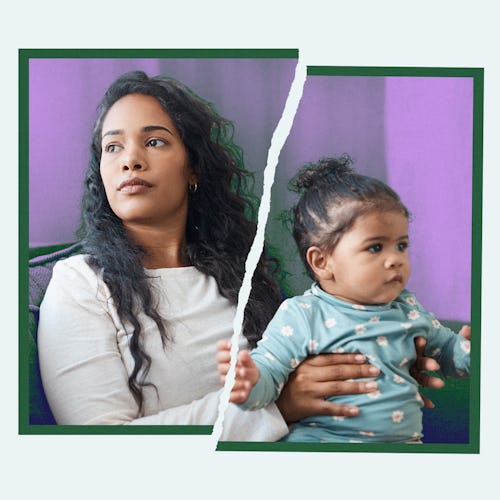
You spent hours picking nursery colors and finishes, agonized over the Snoo or a regular crib, and picked out their homecoming outfit months in advance. You planned every detail, expecting your first moments at home with your baby to be some of the most joyful of your life.
When that time does come, instead of basking in happiness, you’re overcome by anxiety, sadness and hopelessness, making the baby’s needs feel overwhelming. Many new moms are surprised to find that they’re not immediately flooded by adoration and devotion for their baby — feelings they believed would come naturally as soon as their baby was born.
The truth is, feeling disconnected from a newborn isn’t an uncommon feeling among new moms. Often, though not always, it’s a telltale sign of postpartum depression (PPD).
What Is PPD?
Postpartum depression is a mood disorder which occurs after birth, with onset being anytime between one week to one year postpartum. “It significantly impacts functioning and quality of life for new moms and parents,” says Dr. Niyati Dhand, M.D., a double board-certified perinatal and reproductive psychiatrist, and founder of Alaire Psychiatry in Chicago. The prevalence of PPD is 1 in 8 or about 13%, though some healthcare professionals say the number is higher. It can last several months without treatment and affect a person’s functioning, quality of life, relationships and more.
Why Does It Happen?
Dhand says the why is multifactorial, with several biological, psychological and social factors. On the biological front itself there are multiple reasons. “The immediate postpartum period involves the most dramatic physiologic hormone shift a person typically experiences in their lifetime,” she says. There are significant bodywide changes: with hormones and the endocrine system, in the neurosteroid system and immune system, with genetics playing a part.
What Do Moms With PPD Experience?
Women describe feeling a low, depressed or irritable mood, feelings of guilt, decreased interest in things, low motivation and short-term memory difficulties or trouble with focus or concentration. “They have difficulty accessing joy and experience a detachment from things or people that typically ground them or make them feel good,” says Dhand. “And also, they have difficulty bonding with their baby. PPD can sometimes cause mothers to feel detached from their baby and make it difficult to experience joy from interacting with their baby,” she says.
They may have changes in appetite, sleep and energy as seen in depressive episodes outside of the postpartum window, but these symptoms can be unreliable as there is overlap with the general postpartum experience.
Family members and friends can help by keeping an eye out for symptoms. Look for changes in how someone responds to things that typically would bring them joy, and if they withdraw from relationships by distancing and isolation. They might display low motivation and apathy, a detachment from activities or making statements that convey hopelessness.
There can be a loss of interest in caring for themselves including an impact on their personal hygiene. “This is different from when mothers don’t have time to shower or have to prioritize sleep over showering due to limited support,” says Dhand.
Why Do Moms Feel So Alone?
Even though there is greater awareness of postpartum mental health issues and their warning signs, many mothers still feel profoundly alone in experiencing unwanted emotions — feelings that are far more common than they realize. This isolation can directly contribute to a sense of disconnection from their baby.
One major factor is the lack of systemic care. “Systemic issues contribute significantly, particularly the absence of routine maternal mental health follow-ups between six weeks and one year postpartum,” says Dhand.
Social conditioning also plays a powerful role. When a mother feels pressure to lose herself entirely to “mommyhood,” any feelings of sadness, resentment, or ambivalence can feel forbidden. Rather than being processed and supported, these emotions may be suppressed — creating emotional numbness or distance that can extend into the mother–baby relationship.
“It is deeply isolating, and many women experience a strong sense of shame or guilt, believing their depression reflects personal failure or inadequacy,” says Dhand. Beyond that, she says, there is often a fear that they will be misunderstood rather than empathized with, along with concerns about how they will be perceived.
What Can Help?
Find a perinatal therapist or a reproductive or perinatal psychiatrist if the patient is on medication or wants to explore that option. Dhand suggests the resource postpartum.net. She urges her patients to join postpartum mom’s groups (which are often offered through local hospitals or therapy groups) and to engage in meaningful self care. “Ask for support. Coordinate with your partner or family to identify weekly time blocks that allow up to four hours of uninterrupted and protected sleep,” she says.
Gentle, realistic steps matter. Getting out of the house once a day and committing once a week to a reasonable and manageable activity that the mom used to previously enjoy will also help. These moments of reconnection with herself can make it easier for her to show up emotionally with her baby. “Your bond with your baby often improves as you begin to feel more whole and yourself,” says Dhand.
In the meantime, bonding doesn’t have to look like overwhelming waves of love. Skin-to-skin contact, interactive play, talking to the baby, and narrating what you are doing when you’re with them are ways she suggests moms can kick off the bonding experience — and actually help the bond grow. Many new parents in fact need more time to bond with their newborns; it’s not an instant process. When expectations of immediate attachment collide with depression or anxiety, mothers may interpret a slow bond as something being “wrong,” when in reality it’s simply unfolding at its own pace. If the detachment persists, dyadic therapy can really help.
At the end of the day, Dhand wants moms to remember that having depression and reaching out for help doesn’t make you a bad mom — especially when bonding feels hard. In fact, it’s the opposite. “It’s proof you’re a great mom who is trying to get better, not just for herself but for her child as well. I want mothers to let go of guilt as much as possible as we work together to reframe and honor everything they’re doing.”
Presented by BDG Studios
source https://www.scarymommy.com/pregnancy/ppd-feel-disconnected-from-your-baby


Comments
Post a Comment