Motherhood is a huge transition, so it’s not surprising that the changes that come with it can throw our mental health for a loop: About one in every five to seven moms can experience a perinatal mood disorder during pregnancy or in the first year after giving birth.
While postpartum depression, or PPD, is often discussed, it’s important to recognize that it’s not the only mental health condition that can affect new moms during this period.
“Postpartum anxiety tends to be underlooked,” says Dr. Shelly Orlowsky, a licensed clinical psychologist based in Miami Beach, Florida, who specializes in reproductive mental health. One reason? “Anxiety is often more normalized — like, you’re a new mom, of course you’re going to worry.”
But like with PPD, postpartum anxiety (PPA) can have serious effects if left untreated. Understanding the differences in how these two conditions can show up is vital — here’s what to know.
There Are Similarities And Differences Between PPD And PPA
“You often hear PPD as a blanket term for any clinical condition a postpartum mom goes through,” says Orlowsky. It’s often conflated with PPA, and while they do have similarities, they also have important differences.
For starters, each condition shares similar timing: Both PPD and PPA can occur during pregnancy, or within the first year postpartum, and new stressors — like a parent returning to work or the baby starting a new feeding pattern — can contribute to their development or worsen what you’re already feeling, says Orlowsky.
Both conditions also share a similarity in what sets them apart from the “baby blues,” which typically fade within a few weeks: PPD and PPA symptoms are persistent and impair your day-to-day functioning.
“When we’re looking at postpartum depression and anxiety, we’re talking about symptoms lasting more days than not for a period of two weeks or more,” she says. The exact symptoms you experience with the two conditions, though, can vary.
PPD often comes with the following:
- Crying or sadness
- Anger or rage
- Irritability
- Difficulty completing daily tasks
- Fatigue or loss of energy or motivation
PPA, on the other hand, is often marked by:
- Excessive worry or rumination
- Self-doubt
- Racing thoughts
- Nausea, dizziness, racing heart, or diarrhea
Some Symptoms Overlap With PPD And PPA
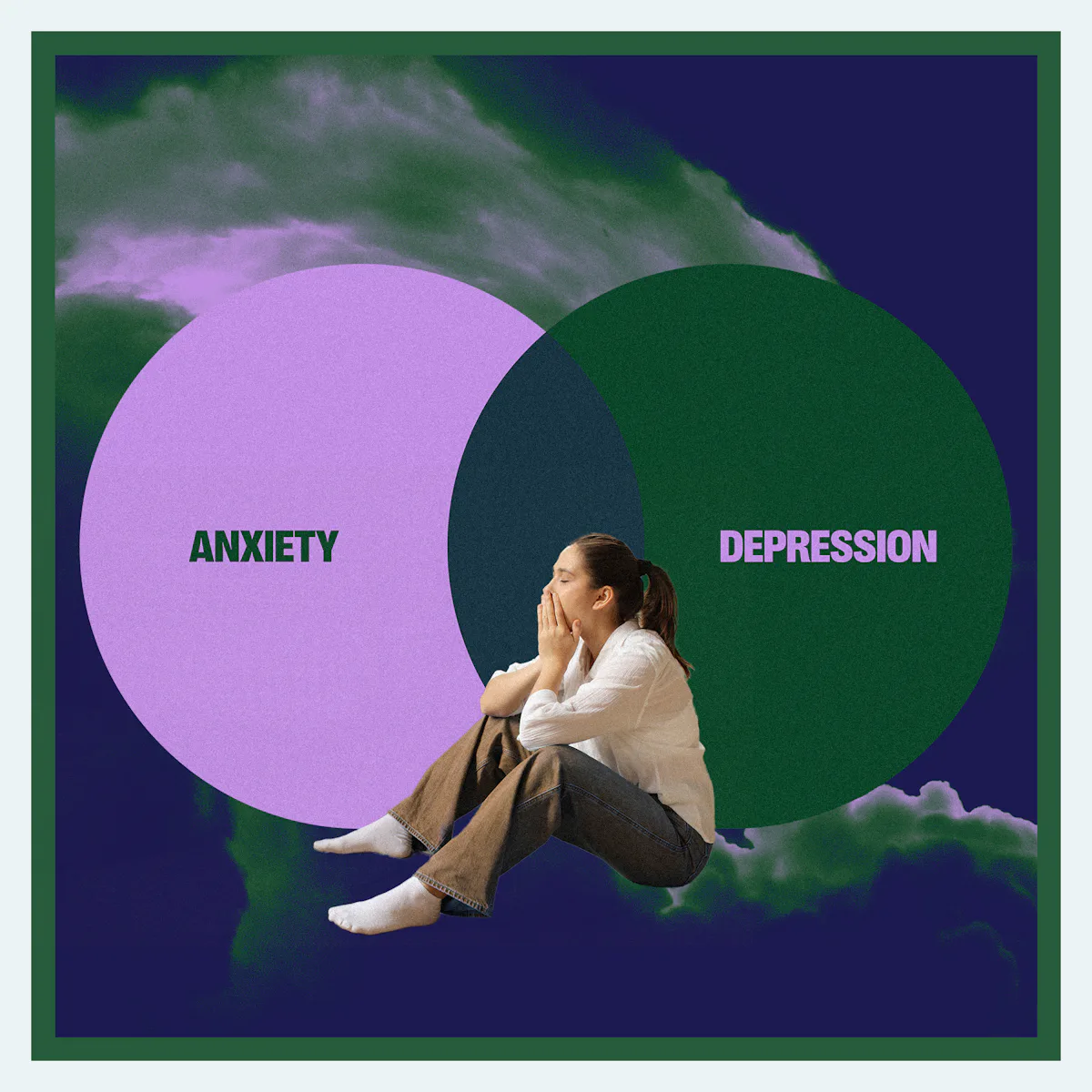
But like non-perinatal anxiety and depression, postpartum depression and anxiety symptoms can overlap, Orlowsky says.
For instance, both conditions can cause:
- Sleep issues
- Changes in appetite
- Feelings of guilt, shame, or hopelessness
- Negative feelings about identity as a mom
“Postpartum depression is more than a depressed mood,” Orlowsky says. “It can often be accompanied by anxiety and overwhelming feelings of guilt and shame, because women will describe having negative thoughts about themselves.”
It’s also possible, according to Orlowsky, that the conditions can occur together or that one can trigger the other. In fact, according to a 2025 study in BMC Pregnancy and Childbirth, nearly 10% of new moms self-reported both PPD and PPA at the same time.
“Over time, the diagnoses can overlap,” she says. “As you can imagine, if anxiety is long-lasting, it can lead to depressive symptoms.” Think of a mom who’s constantly worried about her baby — is he still breathing, is he swaddled too tightly, is he eating enough?
“She’s sleep deprived because she’s checking on the baby, she’s on high alert, she’s exhausted physically and mentally,” Orlowsky says. “That’s going to eventually have an effect on mom where she’s going to feel irritable, agitated, or rageful and depressed because of that. That’s why we do see so much overlap.”
Why It’s Important To Know The Difference
“When there isn’t the information or education given to moms and new families about what to look for, moms are left diagnosing themselves or not really knowing what’s going on,” Orlowsky says. “When we don’t recognize the full range of conditions that moms can experience, they may not receive the right support.”
If a new mom is laser-focused on the symptoms that come with one of these conditions, she may feel like she’s in the clear if she’s not experiencing them — even if she’s struggling with other symptoms causing clear distress. As a result, she may miss out on getting a diagnosis.
Understanding the differences in these conditions can help you recognize that what you’re feeling is more than baby blues or a normal postpartum adjustment. “Having a name for it like, ‘oh, this is postpartum anxiety,’ can help you feel validated,” Orlowsky says.
It can also encourage you to seek prompt treatment. This is crucial because a delay can affect how you bond with your baby and even lead to longer-term consequences. “If left untreated, it can affect mom’s identity — she can have this narrative of being a ‘bad mom’ because of her anxiety or depression,” she says.
Whether you’re experiencing PPD, PPA, or a combination of both, treatment is often very effective, says Orlowsky. Usually, it’s multi-pronged: It can include individual therapy, group therapy, and social support. There may be separate support groups for PPD and PPA, which can be particularly helpful since you can be around other new moms experiencing a more similar subset of symptoms and experiences.
“These mental health conditions are highly treatable,” Orlowsky says. “They can help moms experience symptom relief and be able to reengage or be the mom that they want to be.”
Postpartum Support International can help you find a local or online support group. There’s even a 24/7 help line dedicated to supporting new moms and even family members, including dads and partners.
Presented by BDG Studios
source https://www.scarymommy.com/pregnancy/the-difference-between-ppd-and-postpartum-anxiety
Comments
Post a Comment