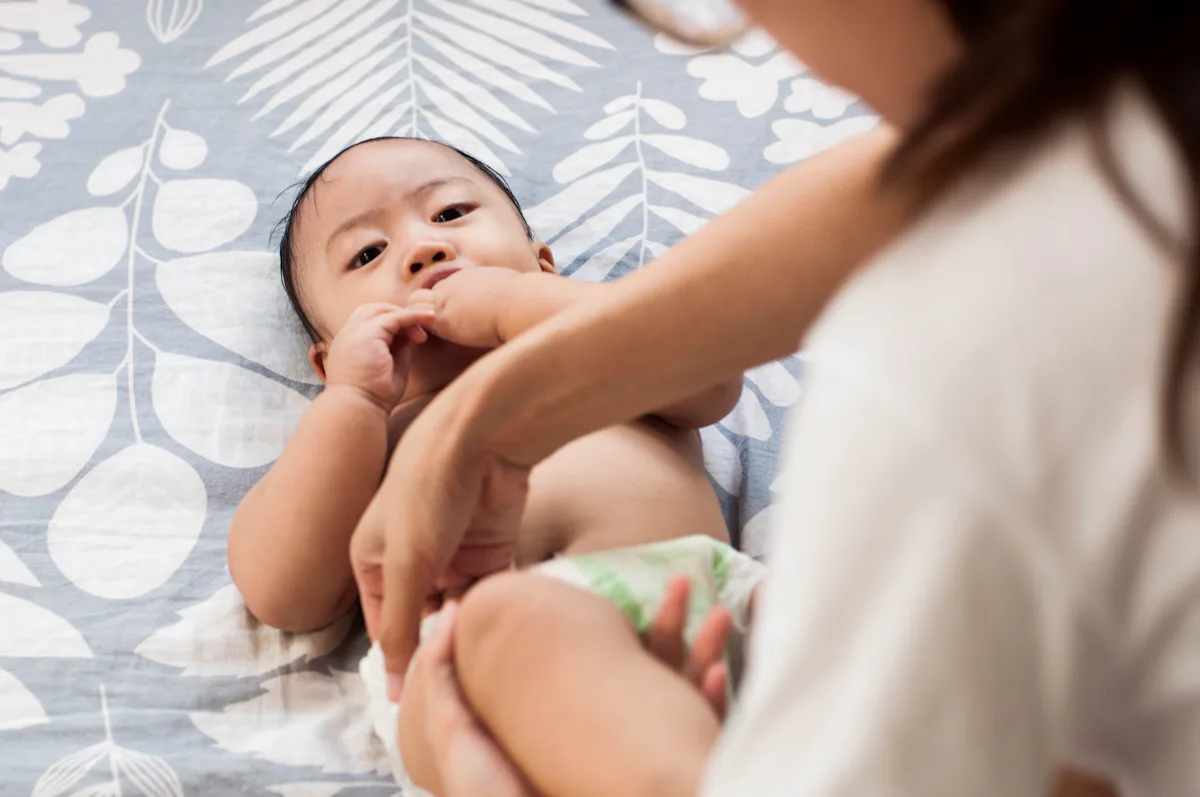
The sound of your baby crying jolts you awake. You struggle to get your eyes to focus long enough to read the alarm clock. It's 2 a.m. You beeline as fast as your sleepy legs will take you to the crib. At first glance, nothing seems out of the ordinary. Then you change your baby's diaper and see it: the skin underneath is red, raw, and definitely angrier than it was during your last crib visit. Cue the mental rewind (and anguish): Did I wait too long between changes? How could I have missed this?
Before you get too far into your spiral, breathe. Remember that diaper rash is the most common skin condition in babies, with nearly every baby getting it at least once [2]. Translation? It's not a reflection of how much attention you were or weren't paying, or a judgment on your parenting. It largely comes down to two culprits, moisture and friction. And that's a good thing, because you can get ahead of those with a few simple habits and the right diaper.
The Best Diapers For Preventing Diaper Rash
Tuck this in your brain for safekeeping: Dryness is your friend. To keep baby's skin dry, you want a disposable with an absorbent gel core that wicks wetness away from skin [1]. Airflow is also important, which is where breathable materials enter the picture. They let air circulate so heat and humidity don't build up against the skin [2].
So, if you want to know the best diaper for preventing diaper rash, it's the diaper that keeps baby's skin driest with the fewest irritants against it.
- Pampers Swaddlers: Ultra-absorbent core, wetness indicator, and now fragrance-free across the entire line. Best value overall.
- Pampers Pure Protection: Plant-based liner enriched with shea butter, cotton-enhanced outer cover, hypoallergenic, and made without fragrance, parabens, latex, or elemental chlorine bleaching. Best for sensitive skin; mid-range.
- Huggies Special Delivery: Plant-based materials, fragrance-free, hypoallergenic. Mid-range.
- The Honest Company Clean Conscious: Plant-based materials, fragrance-free. Premium.
- Seventh Generation: Fragrance-free, chlorine-free, plant-based liner. Budget-friendly.
The Routine Pediatricians Recommend
If you’ve dealt with diaper rash before and you’re trying everything to prevent it from happening again, here’s a good checklist to follow. None of it is complicated, per se, but you need to be relentlessly consistent.
- Change diapers frequently. We're talking every two to three hours during the day, and ASAP for wet or soiled diapers [1]. Shave that schedule down even more for rash-prone babies, checking at least every two hours [4].
- Inspect skin folds and clean gently. Reach for warm water or wipes without alcohol or fragrance [1].
- Pat skin dry (don’t rub) and give it some air. As you've probably deduced by now, extra moisture may cause irritation [2].
- Apply barrier cream liberally. Slather on a thick layer of barrier cream — a zinc oxide or petroleum jelly ointment that sits between skin and moisture. And if the last layer of cream is still clean, add more on top instead of trying to scrub it off [1].
- Wash those hands. Yes, before and after every change, no exceptions [1].
- Pay attention to the fit. If the diaper is too tight, it doesn't allow skin to breathe. Shoot for secure, not too snug, especially overnight [2].
What Actually Prevents Rash: Features, Fit, and Ingredients
Features: An absorbent core draws moisture away from the skin and locks it away [1], while a wetness indicator takes the guesswork out of timing a change in the middle of the night. Rounding it out? Breathable outer layers to minimize heat and humidity buildup [1].
Fit: Too snug, and the diaper blocks airflow and causes increased friction. Too loose, and it's gonna leak on you [1][2]. Adhere to the “two-finger” rule: You should be able to slide two fingers under the waistband and leg cuffs. If you’re seeing red marks, it's your sign to size up.
Ingredients: For sensitive skin, fragrance-free should be your go-to. The same logic applies with choosing fragrance-free wipes [1]. Plant-based liners and fewer added ingredients result in less sitting against already irritated skin.
If Your Baby Has Sensitive Skin
In this case, finding the right diaper matters even more. Keep an eye out for:
- Fragrance-free and dye-free: Artificial fragrances and dyes are a frequent culprit behind irritation. [3]
- Hypoallergenic: By design, a hypoallergenic diaper leaves out common irritants and allergens to minimize skin reactions.
- Breathable cover: Airflow is important, and this allows air to move freely and keeps moisture down.
- Soft plant-based liner: Softer and gentler on baby’s skin.
Pampers Pure Protection checks the key boxes: a plant-based liner enriched with shea butter, a cotton-enhanced cover, a hypoallergenic build, and no fragrance, parabens, lotion, or latex. If your baby’s skin seems reactive to a mainstream diaper, this is the first logical swap.
What Other Parents Recommend
Rash-prone baby recommendations stay consistent across parent reviews and forums: high absorbency, no fragrance, and gentle materials.
- Pampers Swaddlers: The repeat favorite for absorbency, softness, and value. Plus, it's now fully fragrance-free.
- Pampers Pure Protection: A go-to for reactive skin, lauded for its plant-based liner.
- The Honest Company: A popular pick among eco-minded families.
- Seventh Generation: A solid budget-friendly option for parents who want to prioritize clean-label options.
When to Call the Pediatrician
Anytime you feel especially concerned about your child's health, it's a smart idea to escalate it to your pediatrician. And when it's been a few days of consistent care without your baby's diaper rash improving, that holds. Call if [3]:
- The rash won’t go away or has gotten worse after treatment.
- You see pimples, peeling skin, blisters, or crusty or oozing sores.
- It’s bright pink or bright red with red spots at the edges — especially if your baby is on antibiotics, as these symptoms can signal a yeast infection (and require an antifungal).
- The rash seems to be especially painful.
- Your baby runs a fever.
If something feels off to you, don't wait it out. There's a lot to be said for a parent’s intuition; trust that instinct.
Frequently Asked Questions
What’s the best diaper for preventing diaper rash? The one that keeps your little one's skin driest with the fewest irritants. Look for an absorbent core, a breathable build, and no fragrance. Pampers Swaddlers is the best overall pick, with Pampers Pure Protection at the top for sensitive skin.
How can I stop my baby’s recurring diaper rash? Time to tighten up the basics. Swap the diaper for a clean one as soon as it’s wet or soiled, use barrier cream at every change, give diaper-free time to air things out, and make the switch to fragrance-free wipes [1]. If the rash persists, call your pediatrician; a stubborn rash can be yeast [3].
What do pediatricians recommend for newborn diaper rash prevention? Frequent changes, gentle cleaning, a thick barrier cream, and airflow [1][3].
Does the type of diaper make a difference in preventing rashes? Yes. The best diapers for sensitive, rash-prone skin will have fewer ingredients that sit against the skin. You'll want to look for fragrance-free, hypoallergenic, breathable diapers with a soft plant-based liner.
How does a diaper actually prevent a diaper rash? By using a combination of three things – the features, the fit, and the ingredients.
When should I call the doctor about a rash? If the rash lingers, gets worse, develops blisters or oozes, seems painful, or comes with a fever [3].
The Bottom Line
The best diaper for preventing diaper rash is the one that keeps your baby’s skin dry and keeps irritants off it. That’s what makes absorbency, breathability, and a fragrance-free build so vital. Pair that diaper with frequent changes, a good fit, consistent barrier cream application, and ample air, and you’ve covered nearly everything within your control. The rest is for your pediatrician to handle (and that's OK!).
[1] Mayo Clinic. Diaper Rash: Symptoms & Causes. https://www.mayoclinic.org/diseases-conditions/diaper-rash/symptoms-causes/syc-20371636
[2] Cleveland Clinic. Diaper Rash (Diaper Dermatitis). https://my.clevelandclinic.org/health/diseases/11037-diaper-rash-diaper-dermatitis
[3] American Academy of Pediatrics, HealthyChildren.org. Common Diaper Rashes & Treatments. https://www.healthychildren.org/English/ages-stages/baby/diapers-clothing/Pages/Diaper-Rash.aspx
[4] St. Jude Children’s Research Hospital, Together. Diaper Rash (Diaper Dermatitis). https://together.stjude.org/en-us/medical-care/clinical-and-home-care/skin-care/diaper-rash.html
source https://www.scarymommy.com/parenting/best-diaper-for-preventing-diaper-rash
Comments
Post a Comment