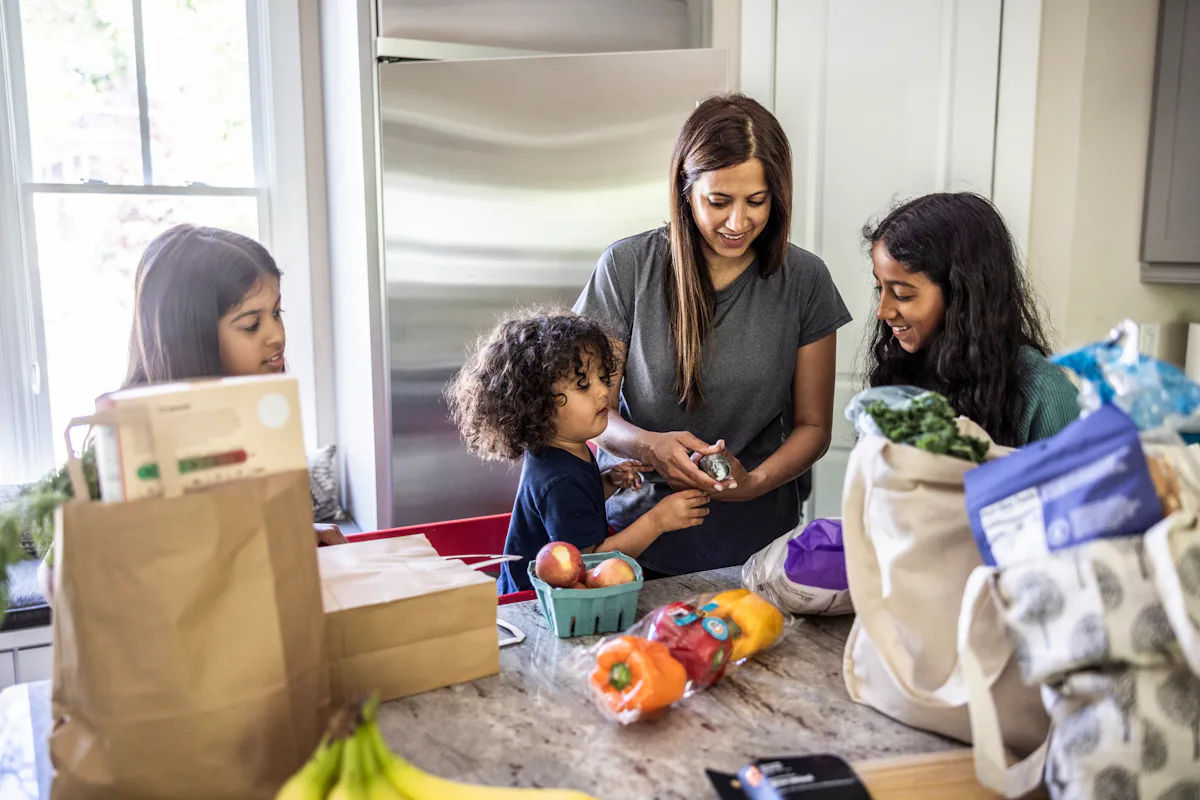
It’s a phenomenon that happens more often than not these days: You run into the store for milk, cheese, eggs, and a few other basics, and walk out wondering how in the hell a small handful of grocery bags just set you back upwards of 100 bucks. Worse, you then have to play budget Tetris, moving money around to make sure you have funds for the inevitable grocery run you’ll have to make next week. Add in the gas it takes to get to and from, and you’re spent literally and figuratively.
The reality is groceries are still painfully expensive, and plenty of families are stretched thinner than ever. And, sure, cutting back on trips is probably one of the easiest and most logical ways to save money (and time, and sanity). But it begs the question: How long can you go between grocery runs without your family surviving on cereal benders?
We asked food and budgeting experts how they personally make it work.
Pick a Tempo That Works for You
Most of the experts we polled said one big shop a week is sort of the sweet spot. “Every extra trip not only takes up valuable time, but is also another chance to grab things that aren’t on the list and drive up your overall grocery bill,” says Laurie Hise, CEO of Passionate Penny Pincher.
Is it possible to stretch it to every two weeks? Maybe. But AJ Prasaguet, head of the iconic Palace bar and restaurant in Miami Beach, points out that biweekly shopping “can work if you have the storage space, freezer capacity, and money available upfront. Those are real considerations, and not every household has all three.”
Amber Hanson, a licensed nutritionist and founder of Whole You Nutrition, emphasizes that there’s no cut-and-dry, one-size-fits-all answer. Your ideal grocery-shopping cadence will ultimately depend on things like how close you live to a store and when your paycheck hits the bank. If you get paid every two weeks, it might make sense to shop on that timeframe too.
Start By Shopping Your Own Kitchen
Before you make your little grocery list and head to the store, open up your own fridge, freezer, and pantry. “The best way to save money is to use what you have already paid for,” says Hanson.
Jenn Lueke, New York Times-bestselling author of Don’t Think About Dinner, does her inventory every Friday night, then builds the next week’s meals around what’s left. Example: “If I know I have a half carton of broth that needs to be used, I’ll make sure to pick up a grain, like rice or quinoa, that I can cook in it.”
Prasaguet goes one step further. “Give an ingredient its next job before you buy it. If a recipe needs half a container of something, decide where the other half is going.” Take cabbage, for instance. It can be slaw one night, stir-fry the next, and soup filler after that.
Another tip Hise is a fan of is ordering online for pickup or delivery when you can. The simple act of skipping the aisles means you don't have to worry about impulse buys wreaking havoc on your total.
Don’t Plan A Dinner For Every Day
As a busy working mom who regularly feels she has to have everything for the week figured out at all times, this was very liberating to hear! As the experts remind us, life happens. Plans change. A rigid seven-night menu is a fast track to wasted food.
But if it makes you feel better to have the week mostly lined up, you could follow Hise’s example: plan five “fresh” dinners a week, leaving one night for leftovers and one for a meal pulled from what’s already in the pantry, fridge, or freezer. Prasaguet relies on a similar formula: four planned dinners, one leftovers meal, one pantry or freezer dinner, on flex night. “That gives the week some structure without pretending everything will go according to plan,” he says.
Lueke recommends starting with dinners, then exploring how you can make the most of them. “Will the slow-cooker chicken stretch to cover lunches for half the week too? Can I make a double batch of quinoa and bulk up our mid-week sheet pan dinner?” Theme nights like Taco Tuesday or Breakfast for Dinner also help reduce decision fatigue.
Eat in Order of Perishability
The trick to making groceries last, many of the pros explained, is buying foods with different lifespans and eating them in the right order. “You do not want an entire cart of produce that all needs attention at once,” emphasizes Prasaguet.
Lueke thinks about it in three zones:
- Counter or pantry: Sweet potatoes, potatoes, onions, garlic, and winter squash like butternut can easily last a few weeks, so they’re her go-to for the end of the week.
- Fridge: Carrots, beets, apples, and citrus hold up well for over a week. Delicate stuff like leafy greens, berries, and fresh herbs gets put on the menu in the first half of the week.
- Freezer: This basically buys you time on pretty much anything. Lueke suggests using frozen food within about three months for best quality.
Andrea Woroch, a consumer savings expert, notes that some hardy produce (think garlic, potatoes, sweet potatoes, winter squash, even whole apples) can last for months depending on storage conditions as well as how they’re handled. For fast-spoilers like berries, resist the urge to buy the giant fresh packs unless you know your family will gobble them down. Otherwise, stock up on frozen.
Let Your Freezer and Pantry Play a Big Part
If you're afraid frozen and canned food won't pack the same nutritional punch as fresh, well, the experts beg to differ.
“One of the biggest misconceptions about healthy eating is that fresh foods are always better than frozen or canned alternatives. That’s simply not the case,” says Jennifer Pallian, a registered dietitian and founder of Foodess. Frozen vegetables are typically flash-frozen shortly after harvest, and research has found they can be just as nutritious as fresh produce that’s been sitting in your fridge for several days. In some cases, they even have more vitamin C.”
Don’t turn your nose up at canned staples, either. Pallian is a big proponent of canned light tuna (a solid source of protein, selenium, and omega-3s) and canned chickpeas, which pack both protein and fiber and are already cooked.
Just opt for low-sodium or no-salt-added canned veggies and beans, and be mindful of foods packed in juices, syrups, or sauces.
Make Every Grocery Go Further
Adopting a few little habits can go a long way toward making food last until your next grocery run:
- Designate an “eat first” zone. Prasaguet and Theresa Link, a registered dietitian, both swear by having a spot in the fridge for leftovers and produce that needs to be used up ASAP. “An ‘eat first’ area in the refrigerator, with dated leftovers and produce that needs attention, is more useful than a beautiful organized drawer you forget to open,” says Prasaguet.
- Double it up. “If you’re already making a slow-cooker dinner this week, why not grab a second pack of chicken and make it a double batch?” Lueke says. “Freeze half, and you’ve made eight servings in the same time it would take to have just made four.”
- Bulk with beans. For added protein, fiber, and volume, Lueke tosses chickpeas into sheet pan dinners or blends a can of beans into pasta sauce.
- Freeze it before it spoils. Overripe bananas, bread, cooked rice, leftovers you won’t get to within a few days' time… they all belong in the freezer before they go bad. Portion out your meat and bread into meal-sized amounts so you only thaw what you need.
- Create a clean-out night ritual. Hise’s family does a regular “clean-out-the-fridge” night or pantry challenge, which saves money and adds a little fun to the dinner schedule.
However, Prasaguet reminds us, “Stretching groceries should never mean stretching food safety.” That means refrigerating leftovers within two hours, eating them within three to four days, or sticking them in the freezer.
The Budget Staples Worth Stocking Up On
You should know that eating well doesn’t mean you have to buy a bunch of fancy superfoods. “Some of the most nutrient-dense foods in the grocery store are also the cheapest,” Hanson says.
Here’s what our experts say they keep stocked:
- Beans and lentils. Whether you go with canned or dried, they stretch meat dishes or stand on their own. Lueke points out that they run around $1 a can, and Hanson puts them in everything (“even pizza!”).
- Cabbage. “The ultimate high-volume, low-cost veg,” says Hanson. It lasts for weeks in the fridge and works in slaws, stir-fries, and rice bowls.
- Potatoes and sweet potatoes. Hanson says potatoes have had an unfair target on their back since the low-carb craze took over, but they’re actually loaded with potassium, vitamin C, and filling complex carbs.
- Eggs. Even when grocery costs go up, Hanson says the price per ounce is still one of the best protein deals you can find.
- Frozen berries. All the antioxidants of fresh, with “zero risk of them going moldy in two days.”
- Canned tuna and chickpeas. Pallian turns tuna into quick patties with breadcrumbs, eggs, and mayo. The uncooked patties freeze for up to three months.
- Bone-in chicken thighs. Lueke says they’re nearly half the cost of chicken breast or boneless thighs, and they’re full of flavor.
- Oats, brown rice, whole-grain pasta, and peanut butter. Shelf-stable building blocks that pretty much every expert mentioned.
And while many of us think shopping in bulk must save money, Prasaguet notes that it’s “only better value if you can afford it, store it, and finish it.” Hise’s workaround is to grab a few extra cans whenever they’re on sale. “A few extra cans a month can add up to a pantry that carries you through a tight month.”
Finally, Let Go of the “Fresh Is Best" Guilt
If you feel like a failure every time you serve your family dinner out of a bag or can, it’s high time you cut yourself some slack.
“Frozen and canned foods that you actually eat beat fresh vegetables you throw away every time,” says Hise. Link agrees, adding, “I’d much rather see a family use convenient foods they enjoy than buy fresh ingredients that become a science experiment in the crisper drawer.”
“A fed family is a win, and ‘fresh’ isn’t the measure of a good dinner," Lueke puts it simply. A balanced meal is made up of a protein, a plant or two, and something filling. It truly does not matter if those came from the produce section or the freezer aisle.
But maybe Prasaguet sums it up best. “You do not have to prove your love through a complicated dinner,” he reassures. “Feeding your family with the resources you have is already an act of care.”
source https://www.scarymommy.com/lifestyle/how-to-make-fewer-grocery-trips-still-eat-well
Comments
Post a Comment